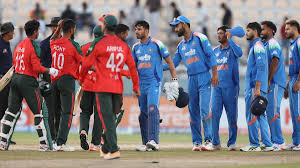
Shrill reactions: India’s cricketing ties with its subcontinental neighbours.
India’s cricket is being held hostage to political compulsions.
Caught in a crossfire, India’s cricketing ties with its subcontinental neighbours are in a free fall. If border tensions with Pakistan and the scourge of terrorism affected sporting links across the Wagah, turbulence within Bangladesh and extreme reactions to it within India, have turned out to be another stumbling block. The ghastly lynching of members of the minority Hindu community in Bangladesh drew rightful condemnation across the Indian landscape, and yet the reflexive sporting churn should have been avoided. In a social media age wherein violence and insults tend to get amplified, the Board of Control for Cricket in India (BCCI) responded prematurely in forcing Kolkata Knight Riders (KKR) to release its Bangladeshi left-arm seamer Mustafizur Rahman. That the Indian Premier League (IPL) is only commencing on March 26 and much water would have flowed down by then in the Ganges and the Padma, was lost on the officials. The Bangladesh Cricket Board (BCB) was quick in its rejoinder. A security threat to its squad was propped up as an excuse and a missive was sent to the International Cricket Council (ICC) to relocate Bangladesh’s games in the forthcoming ICC T20 World Cup, away from host India. Bangladesh also proposed a ban on the telecast of the IPL in the country.
With the T20 World Cup launching on February 7 in India and Sri Lanka, a last minute scrambling for venues will be difficult. Incidentally, Pakistan’s games are slotted in Sri Lanka and even its big contest against India will be staged at Colombo on February 15. With Bangladesh set to play four preliminary league games in India, a reallocation will affect hosting logistics. This is a conundrum that could have been avoided had the BCCI waited for the hostile tide to turn. The ties that bind India and Bangladesh, a nation birthed through the assistance of the former in 1971, now stand frayed. Diplomacy is a complex interplay of adjustment and pragmatism. The deposed former Bangladesh Prime Minister Sheikh Hasina sought refuge and was granted one in Delhi, while the Indian government also paid its last respects to her arch-rival and former Prime Minister, the late Khaleda Zia. The ICC chairman, Jay Shah, has an unenviable task of maintaining neutrality while dealing with the present crisis. The shrill reactions on either side of the border need to be tempered; sport should not be handcuffed by political compulsions.