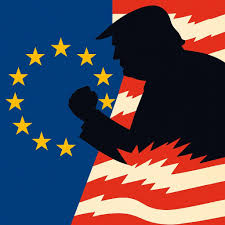
Bullying tactics: On Trump targeting Europe.
Trump’s weaponisation of tariffs over Greenland could undermine NATO.
The Trump administration has vowed to slap a raft of European countries with a 10% tariff on “any and all goods” beginning on February 1 which is then set to increase to 25% on June 1, until an agreement is reached on the U.S. demand to purchase or otherwise acquire the Denmark-administered Arctic territory of Greenland. The latest round of tariffs will add to existing 15% U.S.-imposed trade duties on the countries targeted by the White House, which include Denmark, Finland, France, Germany, the Netherlands, Norway, Sweden, and the United Kingdom. While French President Emmanuel Macron described the U.S. action as “unacceptable”, U.K. Prime Minister Keir Starmer said the move was “completely wrong”. The targeted nations have sent a small number of troops to Greenland for what they have called a reconnaissance mission, essentially for military exercises that signal and reinforce Europe’s collective commitment to defending the autonomous Arctic territory. Such emphasis by the European Union (EU) clearly reflects concern stemming from the fact that American troops recently entered Venezuela and kidnapped and transported its President Nicolás Maduro to the U.S., and Mr. Trump has since gone on record effectively warning that he might consider intervention — for different purposes and in different circumstances — in Colombia, Cuba, Mexico and Iran next.
Leaving aside the neo-imperialist impulse that is implicit in the Trump administration’s plans to control non-allied nations’ territories based on the threat of military action, or to bully allies by weaponising tariffs against them, such actions are tantamount to a violation of international law, and in the case of the EU, risk degrading years of progress made on transatlantic trade agreements. First, there is a serious issue of no legislative backing by the U.S. Congress and legal basis for the unilateral action taken by the Trump administration in targeting Denmark and other European countries. Second, the Trump administration is likely to face, this week, a judicial ruling against its use of the International Emergency Economic Powers Act to impose tariffs across the board. Third, European nations may bring into force what is known as the “ anti-coercion instrument”, a counter-tariff facility that would limit the trade of major U.S. tech firms and related service providers that conduct significant business in the EU. Whatever the denouement of this Trump-made conflict, it will likely take years, if not decades to heal the worsening transatlantic rift that has beset the region. Meanwhile a weakened NATO will stand less able to assist Ukraine in facing off against the depredations of an aggressive Russia on the eastern front. The need of the hour is enlightened leadership, a far cry from what is presently on offer in Washington.