A piece of board: On India and Donald Trump’s Board of Peace.
India must eschew temptation to be a part of Trump’s peace board.
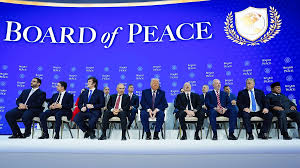
India on Thursday skipped the U.S. President Donald Trump-led “Board of Peace” charter announcement held in Davos, although the government is said to be still discussing the invitation to Prime Minister Narendra Modi to join it. The Board of Peace is part of the Trump administration’s Phase 2 of the Gaza Peace Proposal, which is meant to oversee security, humanitarian assistance, reconstruction in the Gaza strip, and pursue a path to resolving the Israel-Palestine conflict through talks on a two-state solution. This was cleared unanimously by the UN Security Council (Russia and China abstained) last month, after Israel and Hamas agreed to a ceasefire and all living Israeli hostages were returned home. The proposal has been welcomed by many countries, not the least because it paused Israel’s relentless bombing campaign and ground operations in which more than 70,000 Palestinians have been killed including 20,000 children, in retaliation for Hamas-led terror strikes in October 2023. There are some reasons for India to seriously consider joining the BoP, as about 20 other countries already have. India has been a principled supporter of the Palestinian cause, and a consistent provider of humanitarian assistance including through the UN agency UNRWA, and this could be an opportunity to help the brutalised Palestinian population directly and help rebuild their land. The decision by regional powers UAE, Saudi Arabia, Israel and Turkiye to join may put pressure on the Modi government to follow suit. The rupture in US-India ties and fragility of trade negotiations maybe another cause not to rebuff Mr. Trump’s invitation at this stage as it may invoke his ire as French President Macron has.
Neither pragmatism nor principle dictates taking such a decision in haste, however, and a country of India’s standing cannot act based on the fear of missing out on a position of influence, or fear of punishment by the US. To begin with, even though the United Nations has backed the US’s original plans, the latest structure and mandate of the BoP appears to have been unilaterally altered and does not actually mention Gaza, according to leaked versions of the charter. Mr. Trump has appointed himself as Chairman, with personal friends and family on the Executive board, and the charter released proposes to extend the BoP to other conflict-resolution ventures, suggesting it would seek to supplant the UN itself. Secondly, while the board will appoint Palestinian technical experts, it does not include the Palestinian leadership in any way, an affront to all countries including India who have recognised Palestine. That Mr. Netanyahu, accused of genocide by UN agencies should be included, but not the Palestinian president, adds to that injustice. For India, Pakistan’s decision to join the board is a red-flag, particularly if Mr. Trump decides to include the Kashmir dispute to peace plans the BoP will seek to resolve. The BoP’s 2-tier membership, offering “permanent” membership for a “fee” of one billion dollars is another red-flag. It will also be difficult, once on board, for India to cavil at its troops joining the International Stabilization Force (ISF), which is a non-UN initiative. Without clarity in the decision-making process of the board, members will simply be rubber-stamps to Mr. Trump’s arbitrary and often illegitimate diktats on the future of the Palestinian people. Instead, New Delhi must continue to consult partners on the best way forward, particularly the Palestinians themselves, even as it keeps its own independent counsel. Above all, while making its decision, India must listen to its own conscience.