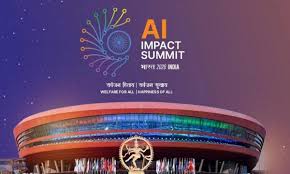
AI summit is an opportunity. Global South must seize the moment.
The AI Impact Summit, which begins in New Delhi, will be the first such conclave in the Global South. The choice of venue is more than just symbolic. Earlier editions of the summit paved the way for larger conversations on global AI governance. However, the Global South has largely been underrepresented in the norm-setting processes. The Delhi Summit is an opportunity to address this imbalance. It’s almost certain that AI will be much more deeply embedded in disciplines central to human well-being — medicine, agriculture, law, even humanities and social sciences —compared to any other technology in the past. Innovation, therefore, cannot remain moored in the languages, insights and datasets of the advanced economies. For countries in large parts of Asia, Africa and Latin America, correcting the AI skew is not merely a technical issue — it’s closely intertwined with developmental concerns. In a geopolitically volatile world, this equity imperative is also tied to national security concerns.
India’s journey offers a persuasive framework for an alternative AI pathway. The country’s digital public infrastructure (DPI) — the cornerstone of welfare provisions, ranging from agriculture and food security to subsidies for cooking gas to vaccine delivery — has underlined inclusion and affordability. Instead of focusing only on capital-intensive proprietary frontier models, developed countries could work on building AI layers atop existing DPI systems. When governed responsibly, datasets in such systems can power service optimisation. India’s multilingual AI initiative, Bhashini, is a good example. It addresses one of the biggest barriers in welfare delivery — language accessibility. When voice interfaces are integrated with DPI systems, citizens can interact online with government service delivery systems in their own languages. In the linguistically diverse nations of the Global South, such AI tools can become harbingers of good governance.
Close to 90 per cent of AI patents today originate in the US, Europe and China. That’s why even as it charts its own course and tries to democratise AI development, the Global South cannot afford to remain disengaged with the advanced economies. In India, like in many other developing countries, innovations — including DPI — have historically been stewarded by the government. State control has come down substantially in the past three decades. But a technology that thrives on experimentation, collaboration, risk-taking, and access to global research networks requires the government to become an enabler, not a controller. At the same time, concerns over privacy, security — national and individual — and fairness are central to AI development. These issues are part of global conversations . The Delhi Summit could help open the way to a richer and more inclusive AI ecosystem.